Why UVB Distance Matters
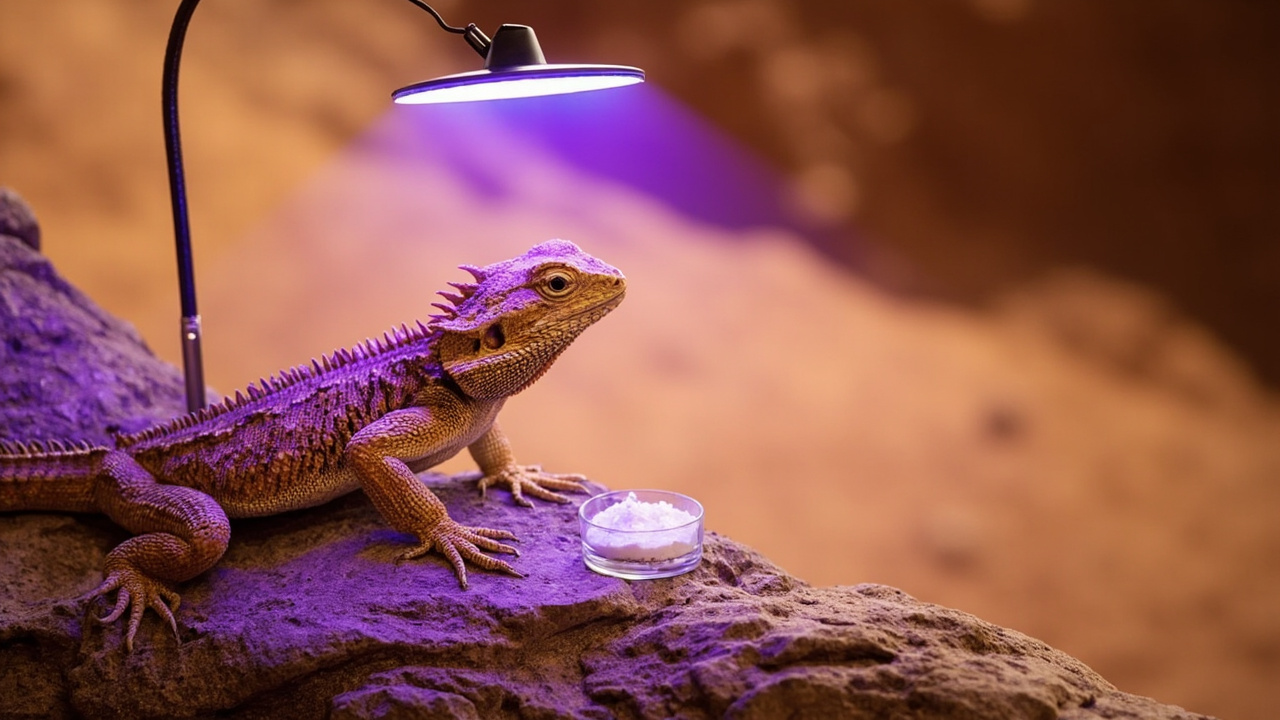
UVB lighting is the most misunderstood aspect of reptile husbandry. Too little UVB causes metabolic bone disease (MBD) — soft, deformed bones that are often fatal. Too much UVB causes photo-kerato-conjunctivitis (eye damage) and skin burns. The correct dose depends on two things: your reptile’s Ferguson Zone and the distance between the bulb and the animal’s back.
The UVB distance calculator above computes the safe basking distance so your reptile receives the right UVI for its species.
Understanding the Ferguson Zones
The Ferguson Zone framework (Ferguson et al., 2010) groups reptiles by how much UVB they naturally seek:
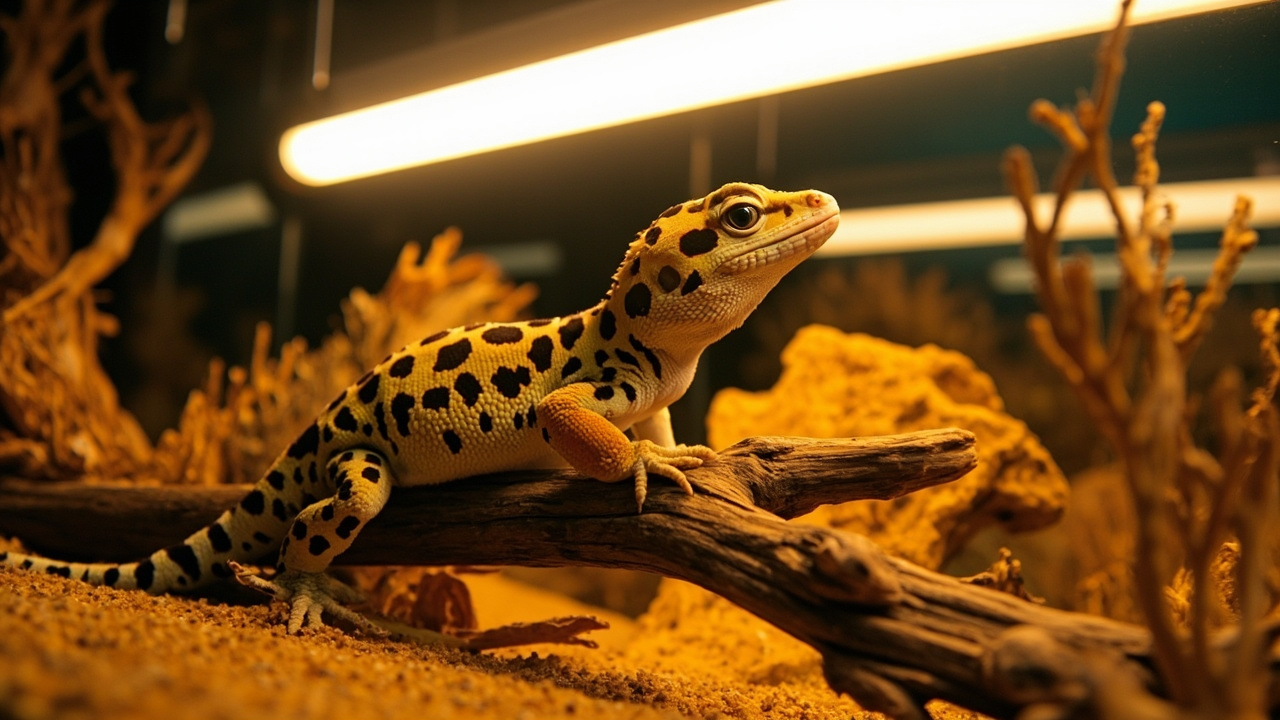
- Zone 1 (Crepuscular / Shade): Leopard geckos, ball pythons [^2], corn snakes [^3]. These species get little direct sun in the wild and need low UVB (0.0–1.1 UVI) or none at all.
- Zone 2 (Partial Sun): Crested geckos, some skinks. Basking UVI of 1.1–3.0.
- Zone 3 (Open / Partial Sun): Blue-tongue skinks (basking), water dragons. Basking UVI of 2.9–7.4.
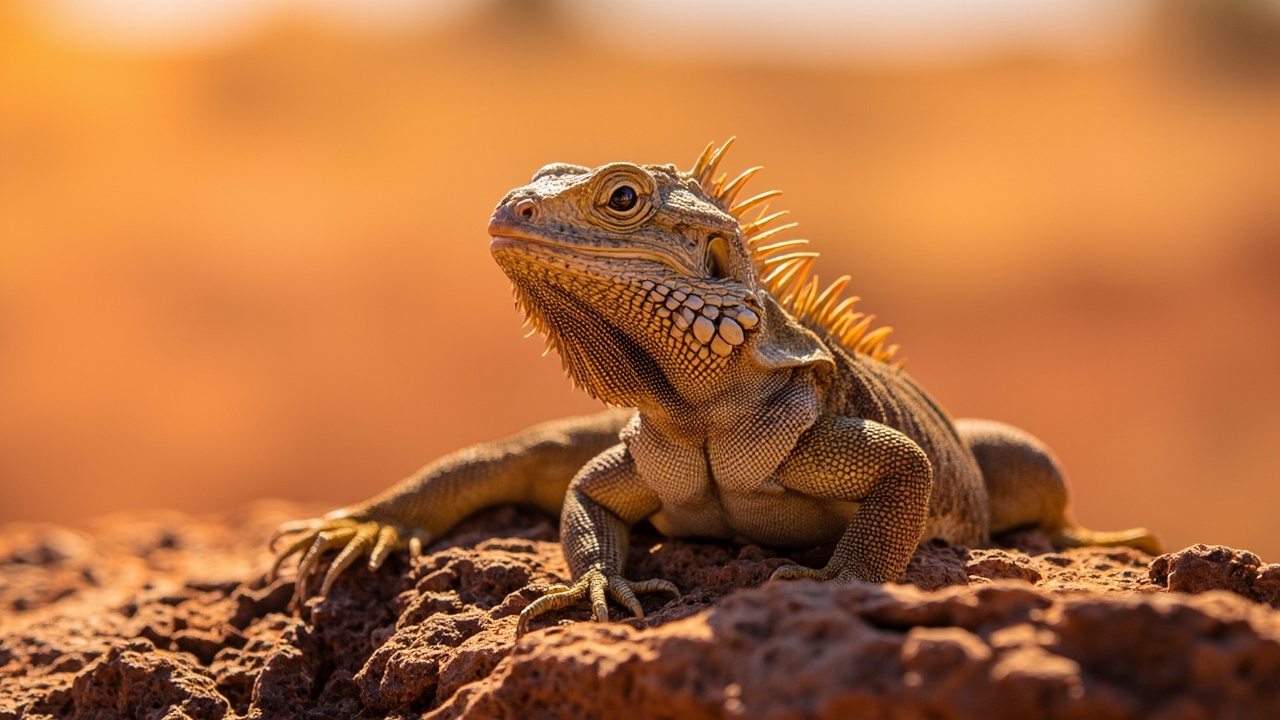
- Zone 4 (Mid-day Open Sun): Bearded dragons, uromastyx. The highest UVB demand: 4.0–7.4 UVI.
How UVB Decays with Distance
UVB intensity follows an inverse-square law: doubling the distance reduces UVI to roughly one-quarter. This is why a bulb that produces 23 UVI at 12 inches produces only ~5.75 UVI at 24 inches. The calculator uses your bulb’s rated UVI at its reference distance to solve for the distance that hits your species’ target UVI range.
The Mesh Factor
Screen tops are convenient, but they block UVB. A typical fiberglass screen attenuates roughly 15–20% of UVB; metal mesh can block more. The calculator’s mesh option compensates by increasing the recommended distance. For maximum UVB transmission:
- Mount the fixture inside the enclosure below the mesh, or
- Use a screen section with larger openings, or
- Remove the screen directly under the UVB fixture.
Why You Still Need a Solarmeter
The calculator is a starting estimate, not a measurement. Real UVI at the basking site varies with:
- Reflector geometry — a polished reflector can double effective UVI.
- Bulb age — UVB output drops ~30% in the first year and continues to decline. Replace bulbs every 12 months even if they still emit visible light.
- Enclosure ventilation and surfaces — reflective decor can concentrate UVB unexpectedly.
The only way to know the real UVI at your reptile’s back is a Solarmeter 6.5 (or equivalent solar meter). Measure at the exact spot and height where your animal basks. If you keep Zone 3 or Zone 4 species long-term, a Solarmeter is one of the best investments you can make.
Pairing UVB with the Rest of the Setup
UVB is one piece of the lighting and heating puzzle. It must be paired with:
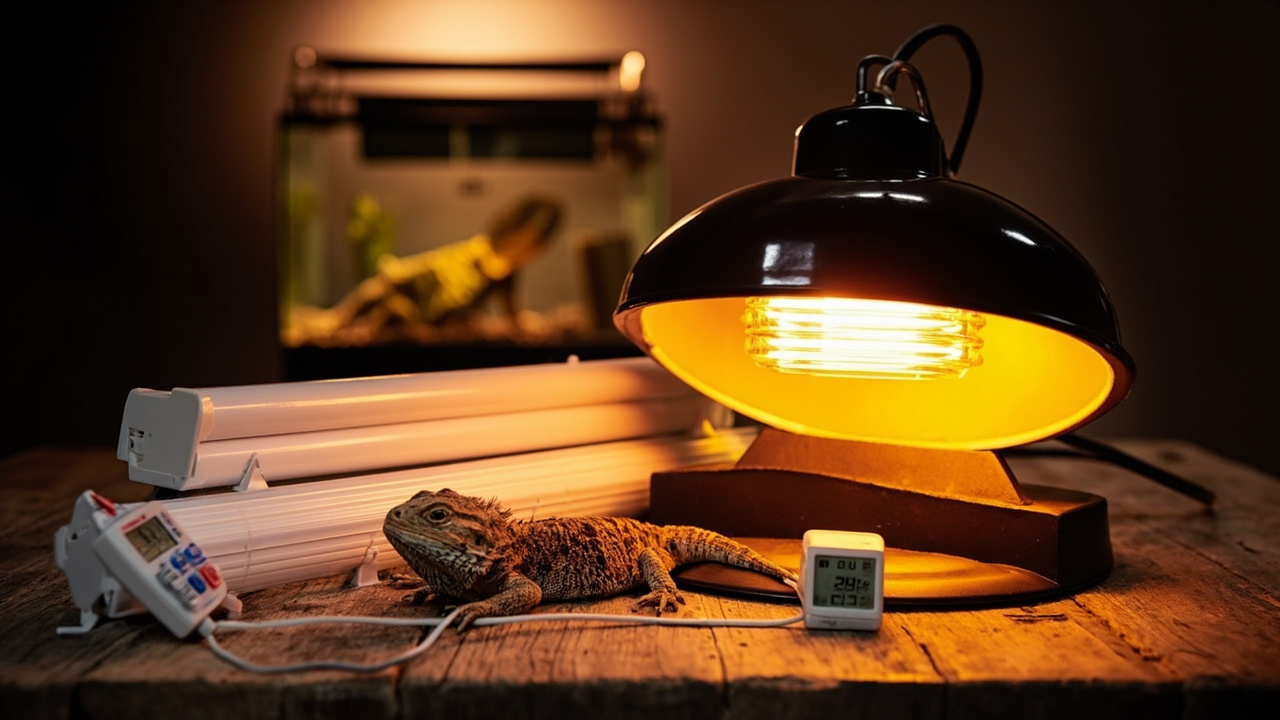
- A basking heat source to create the temperature gradient — see the heating and lighting setup guide and the temperature converter.
- The right enclosure size so the gradient has room to develop — use the tank size calculator.
- Calcium supplementation, since UVB enables D3 synthesis for calcium absorption — inadequate UVB plus inadequate calcium is the fast track to MBD.
Common UVB Mistakes to Avoid
- Using a coil UVB bulb as the sole source. Coil bulbs produce uneven, often too-intense UVB. Use linear T5 or T8 HO tubes for even coverage.
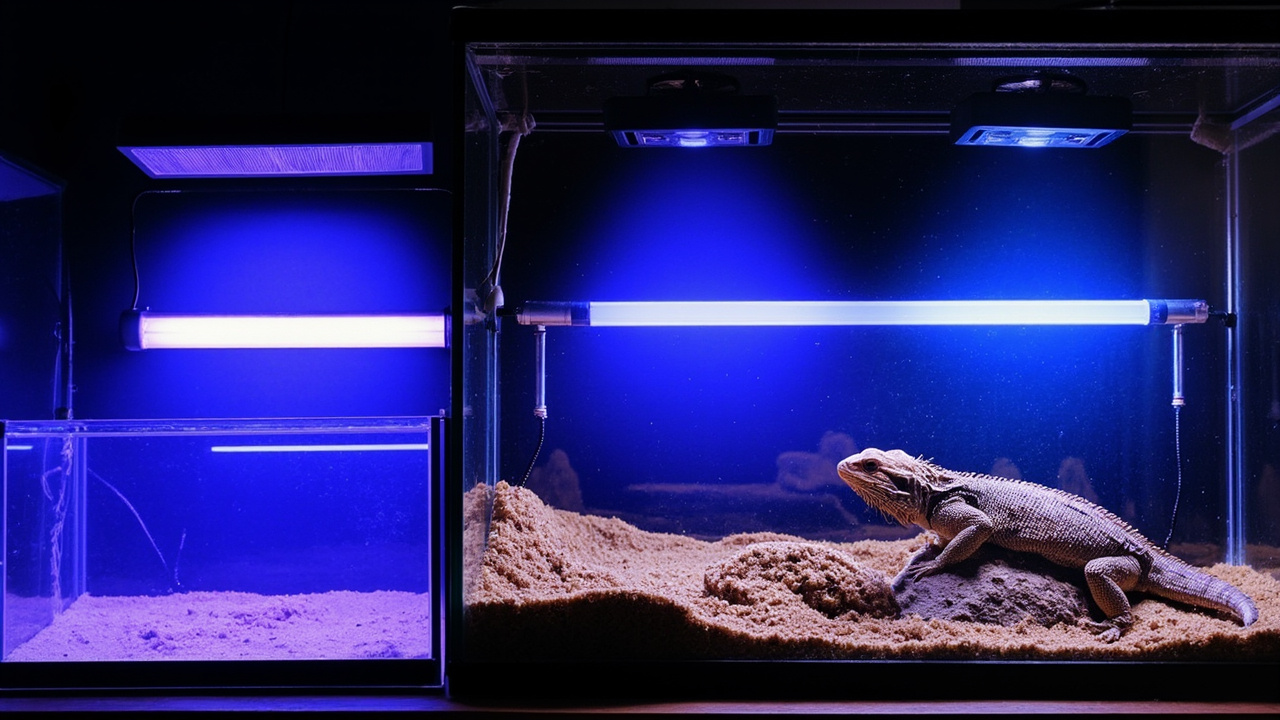
- Placing UVB through glass. Standard glass blocks 100% of UVB. The bulb needs direct line-of-sight to the animal.
- Keeping bulbs too long. Visible light lasts years; UVB output does not. Replace annually.
- Assuming all UVB is the same. A 10.0 “desert” bulb is not automatically right for every reptile — match the output to the zone, not the marketing label.
Run the calculator with your bulb’s rated specs, set the distance, then verify with a Solarmeter at the basking site.