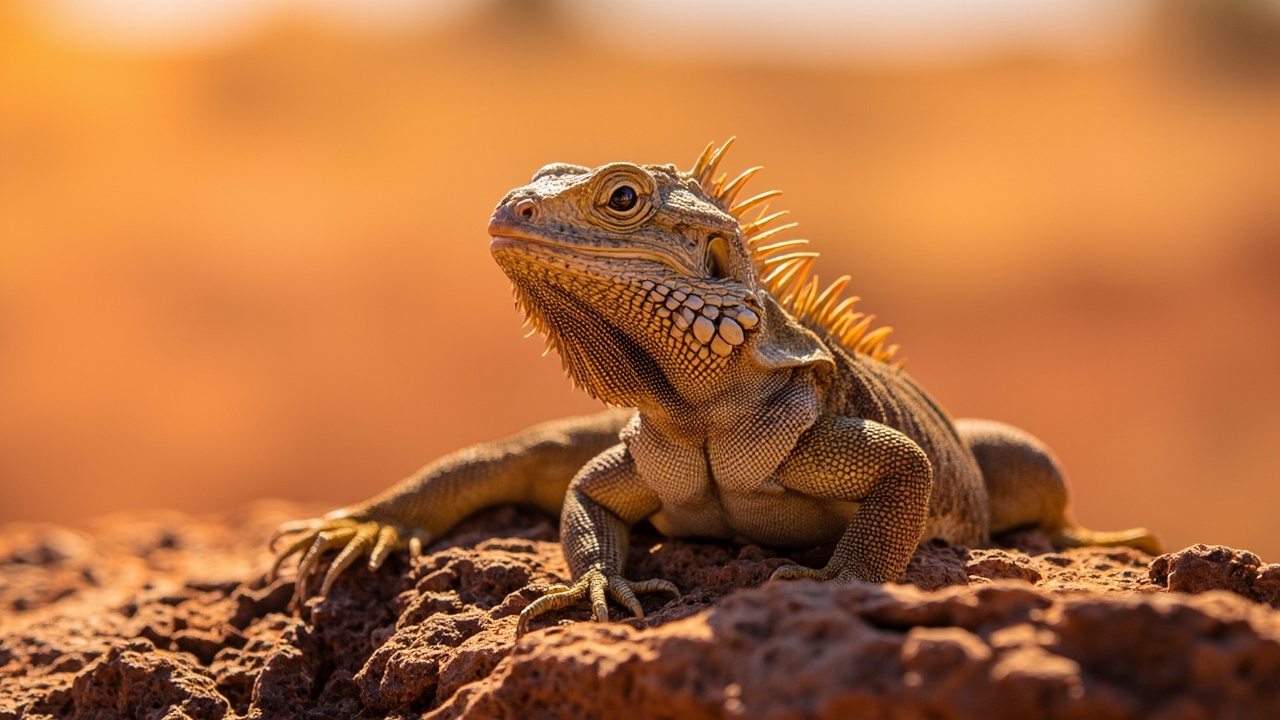
What Is a Bearded Dragon?
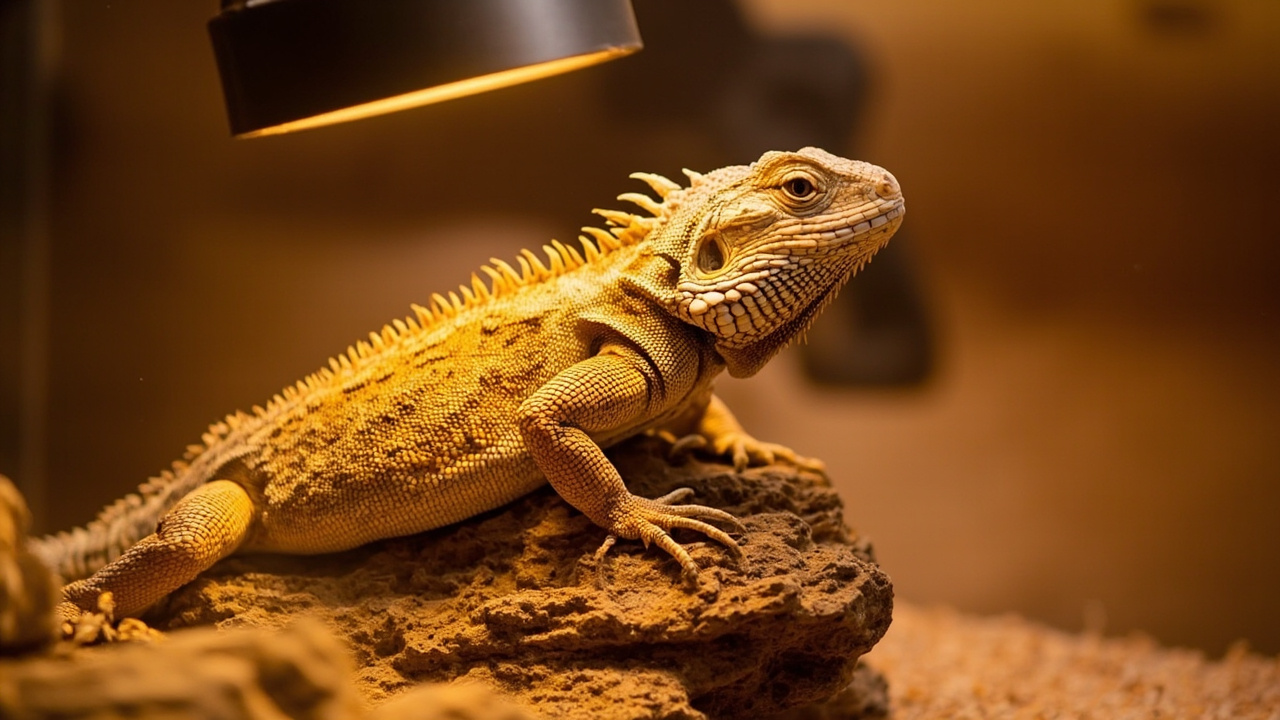
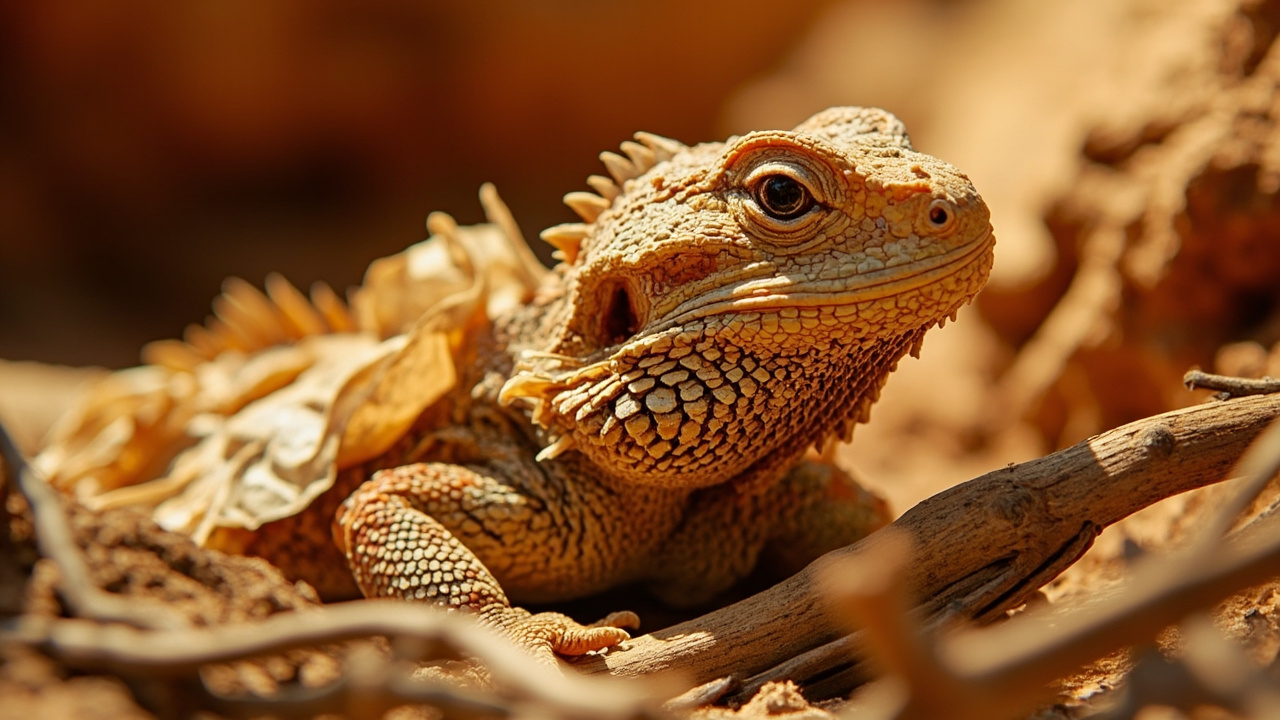
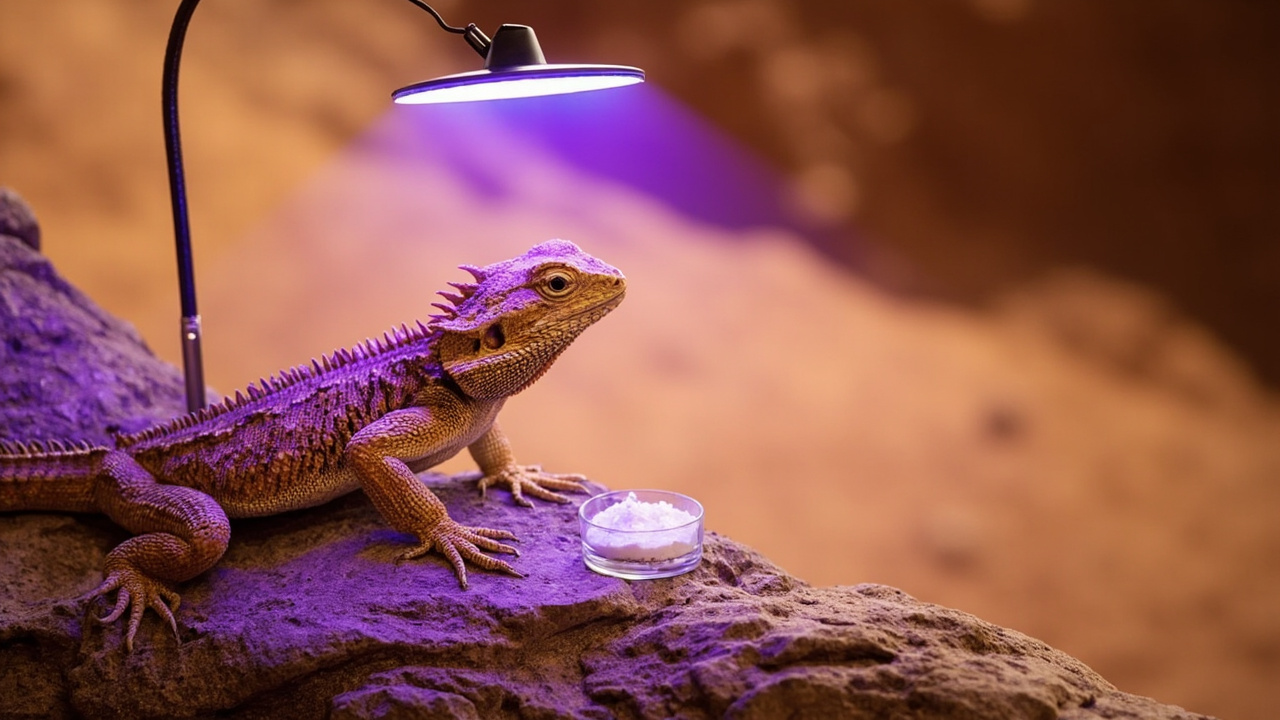
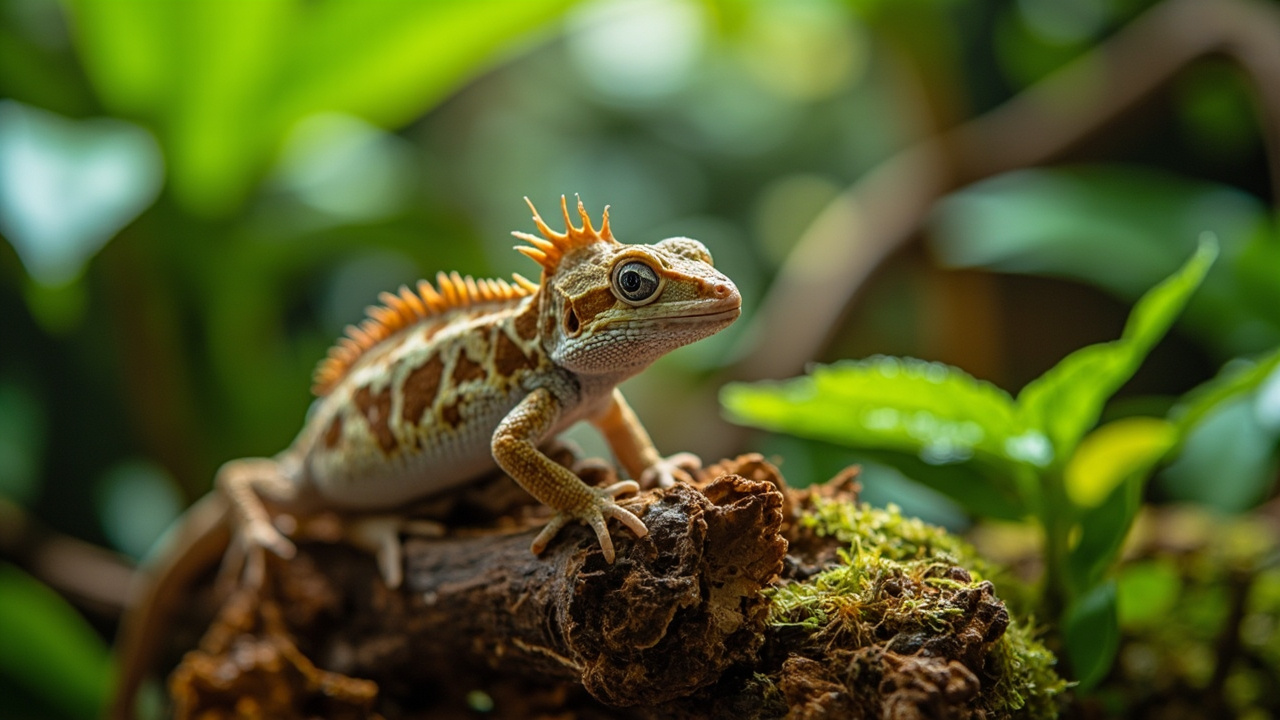
The bearded dragon (Pogona vitticeps) is a medium-sized agamid lizard native to the semiarid scrublands and desert edges of eastern and central Australia. They are named for the spiky, expandable throat pouch that darkens to black when they display dominance, stress, or excitement.
Bearded dragons are diurnal, meaning they are active during the day and sleep at night — unlike crepuscular species like leopard geckos. This daytime activity, combined with their docile temperament and curious personality, makes them one of the most engaging pet reptiles. They often learn to recognize their keeper, will actively watch activity outside their enclosure, and enjoy being handled. That forgiving temperament also makes everyday bearded dragon care approachable even for first-time keepers.
In the wild, bearded dragons are opportunistic omnivores — they hunt insects and small lizards while also eating flowers, leafy greens, and fruit. This natural diet directly informs how we feed them in captivity: a balance of live insects and fresh vegetables that shifts toward more plant matter as they age.
Enclosure Setup
Enclosure setup is the foundation of bearded dragon care: get heat, light, and floor space right first, and most other problems never appear.
Tank Size
The minimum enclosure for an adult bearded dragon is 120 gallons (4’ × 2’ × 2’). Not sure what size you need? Our tank size calculator can help you find the right dimensions, and our setup cost calculator provides an honest budget breakdown. This is not a suggestion — it is the minimum needed for a proper temperature gradient and enough room for the dragon to move naturally. Juveniles can start in a 40-gallon enclosure but will outgrow it quickly (bearded dragons grow from 4 inches to 16+ inches in their first year).
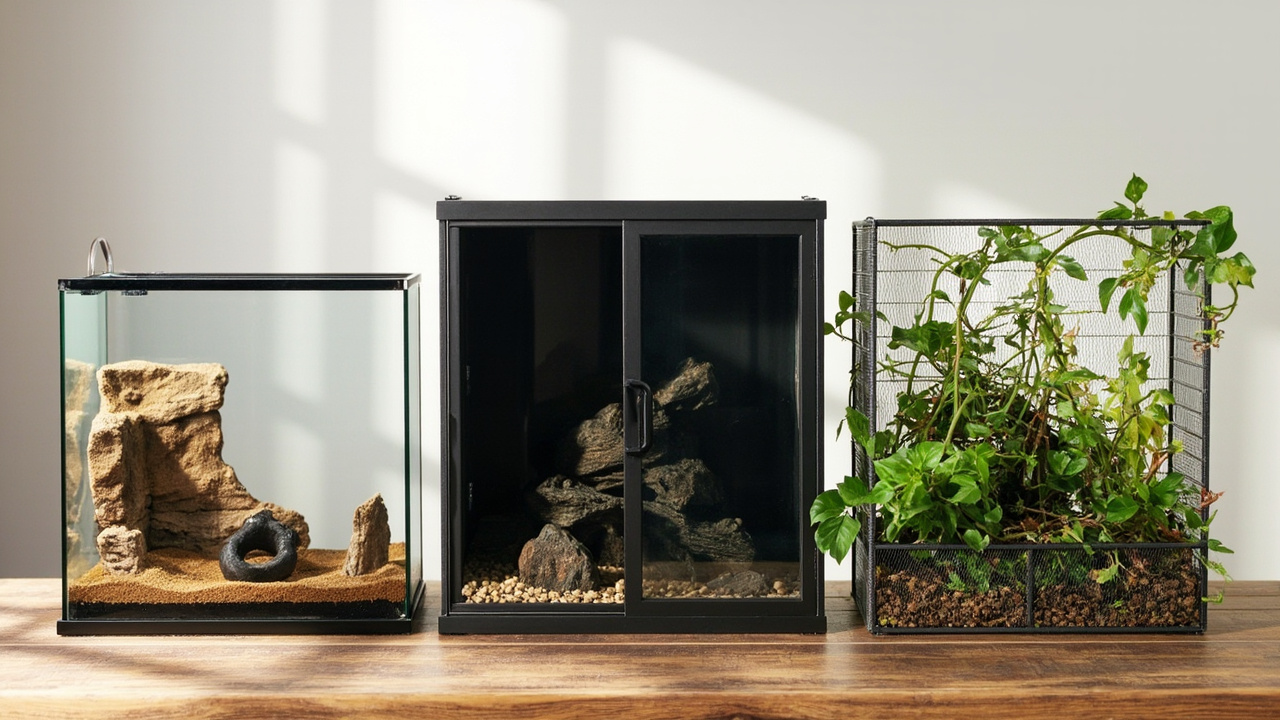
Front-opening PVC enclosures like the Terroute 120 Gallon Reptile Tank ($189.99) are preferred over glass tanks because they hold heat better and maintain humidity control. Glass tanks work but require more effort to maintain stable temperatures.
A 4’ × 2’ × 2’ enclosure is not just a recommendation — it is the minimum. Bearded dragons are active lizards that need horizontal space to thermoregulate. Anything smaller leads to stress and health problems over time.
Lighting and Heating
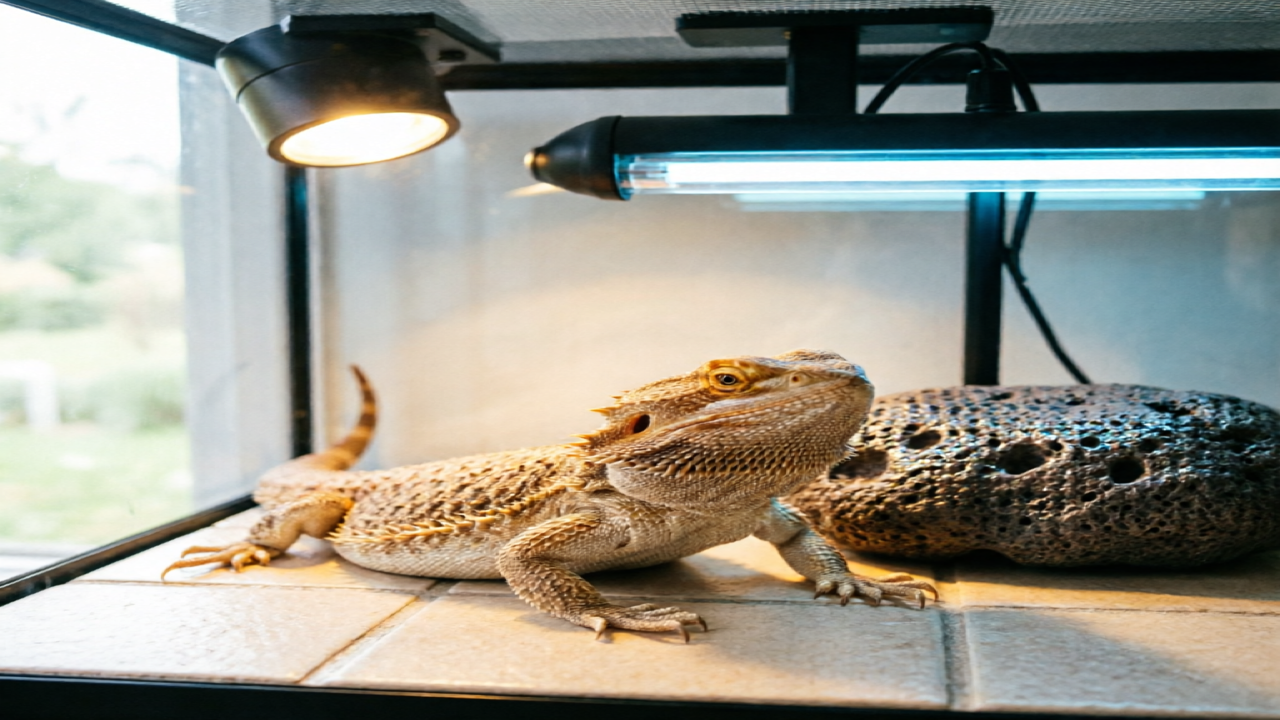
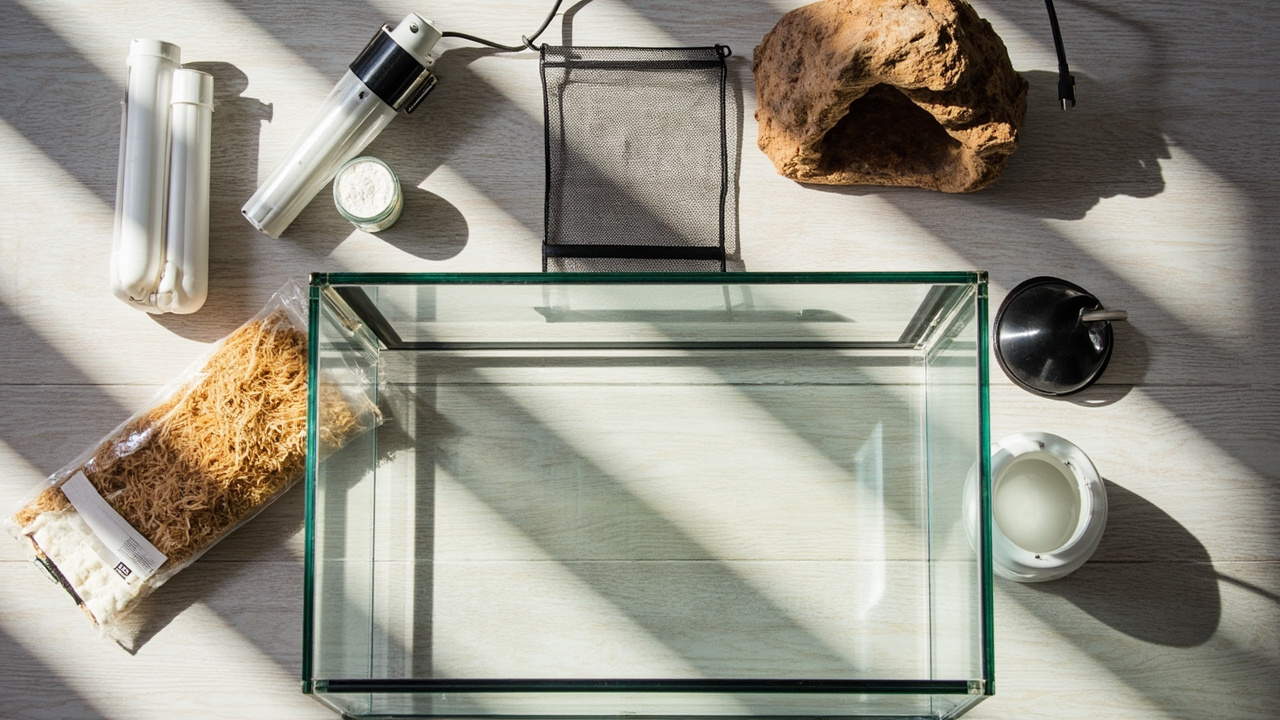
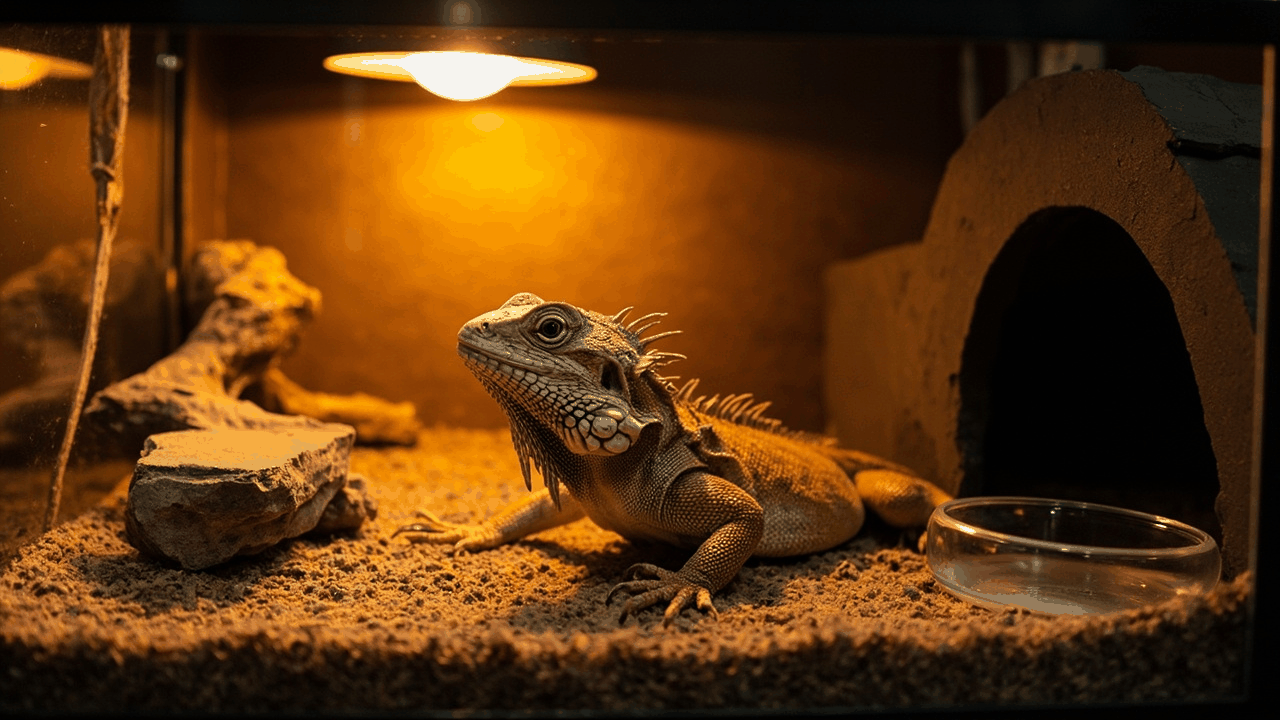
Proper lighting is the single most important factor in bearded dragon health. Explore our recommended reptile equipment for a full list of supplies. You need two things:
-
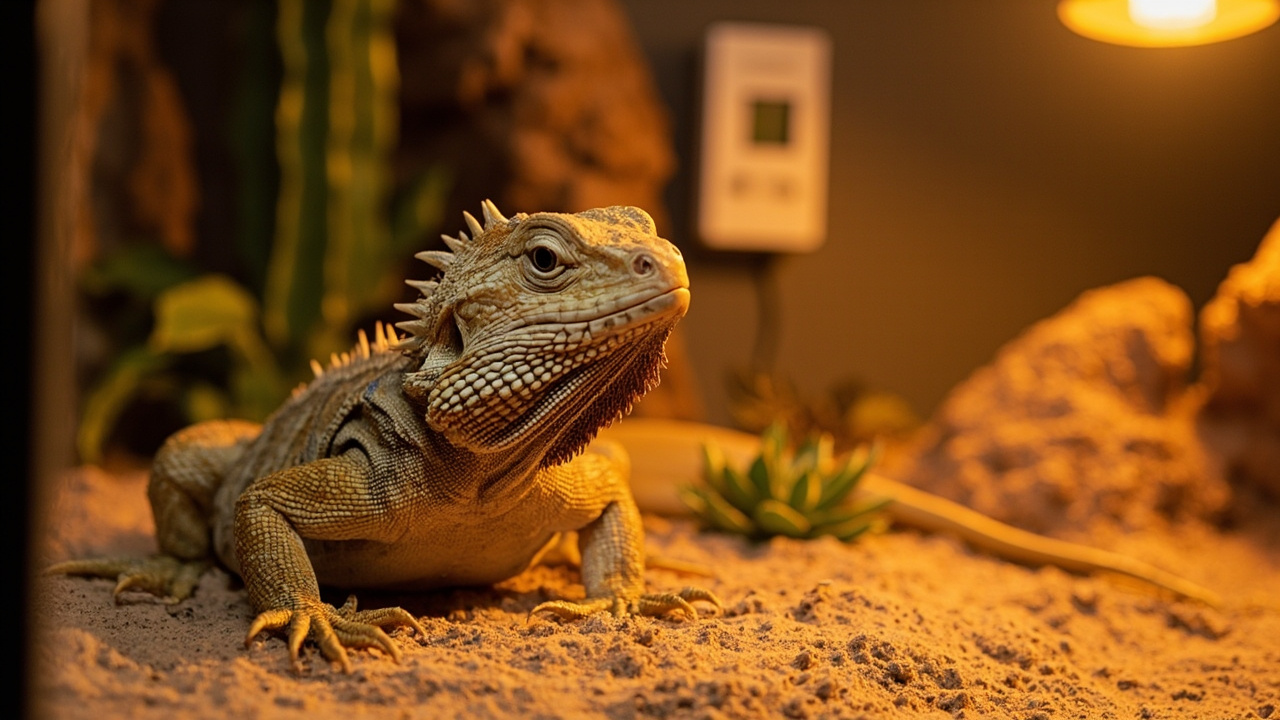
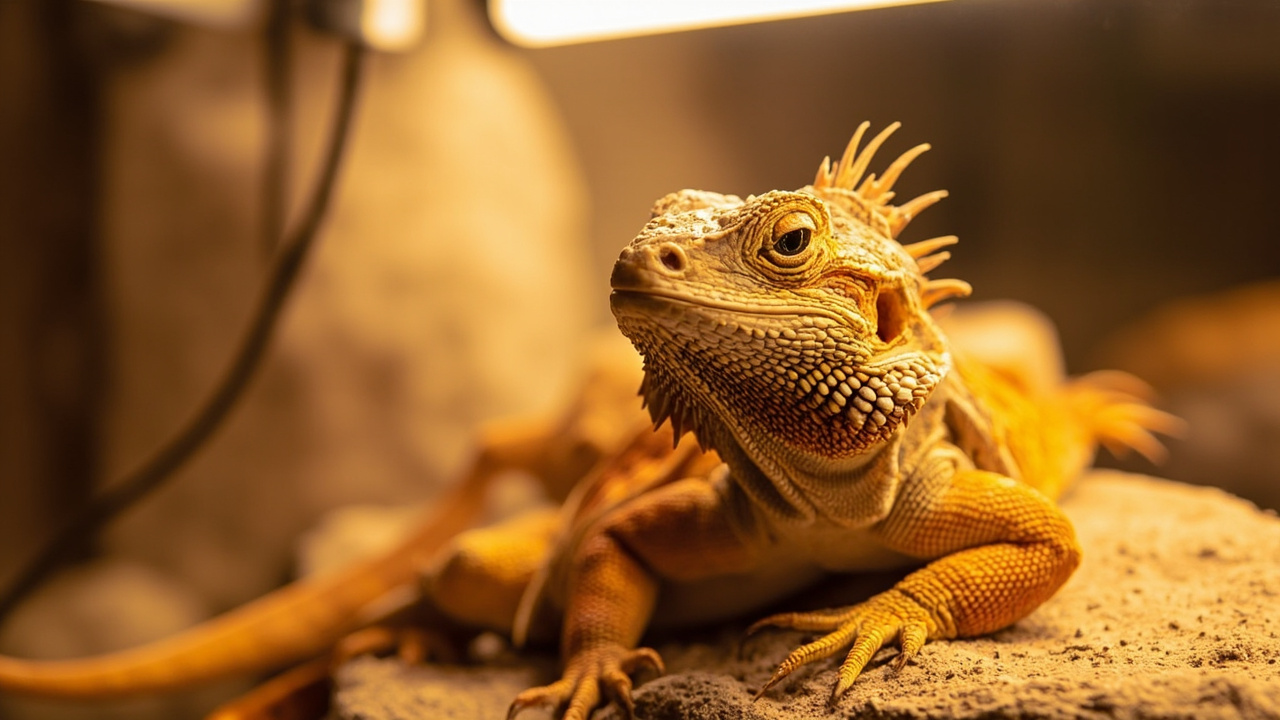
Basking heat — a deep heat projector ($15.99) or halogen bulb creates a focused hot spot. Place it over a raised basking rock or branch.
-
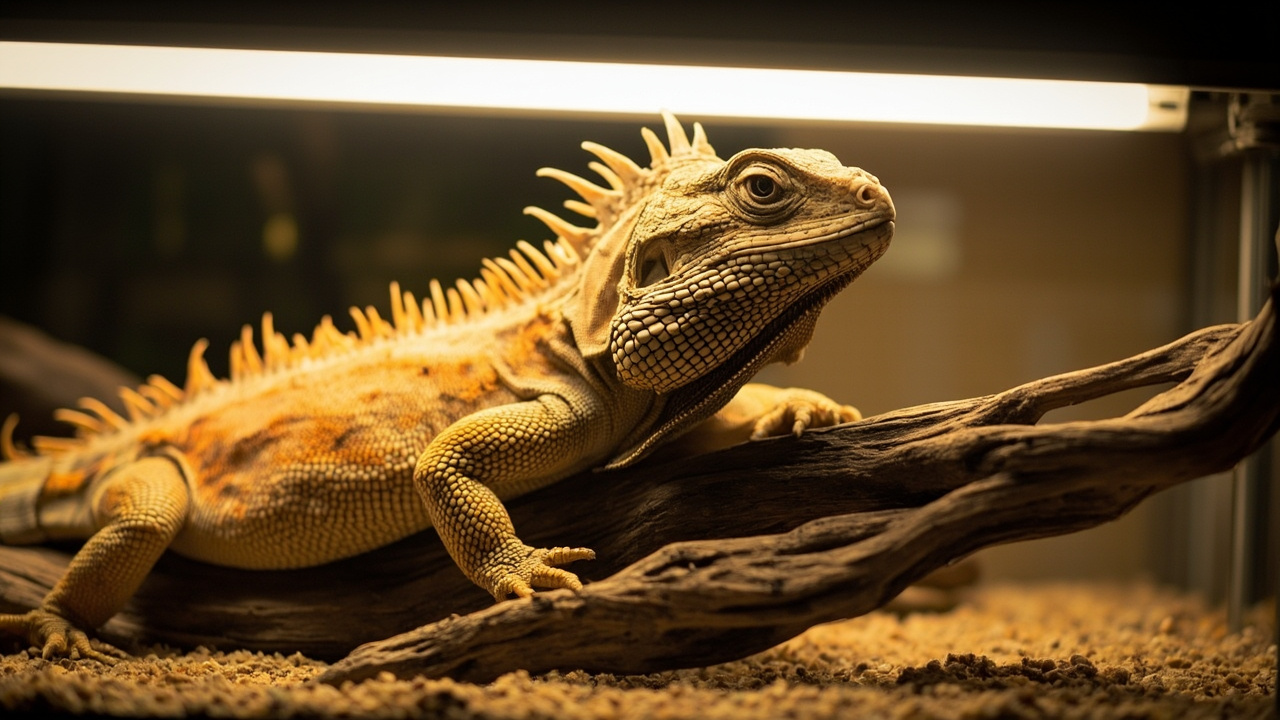
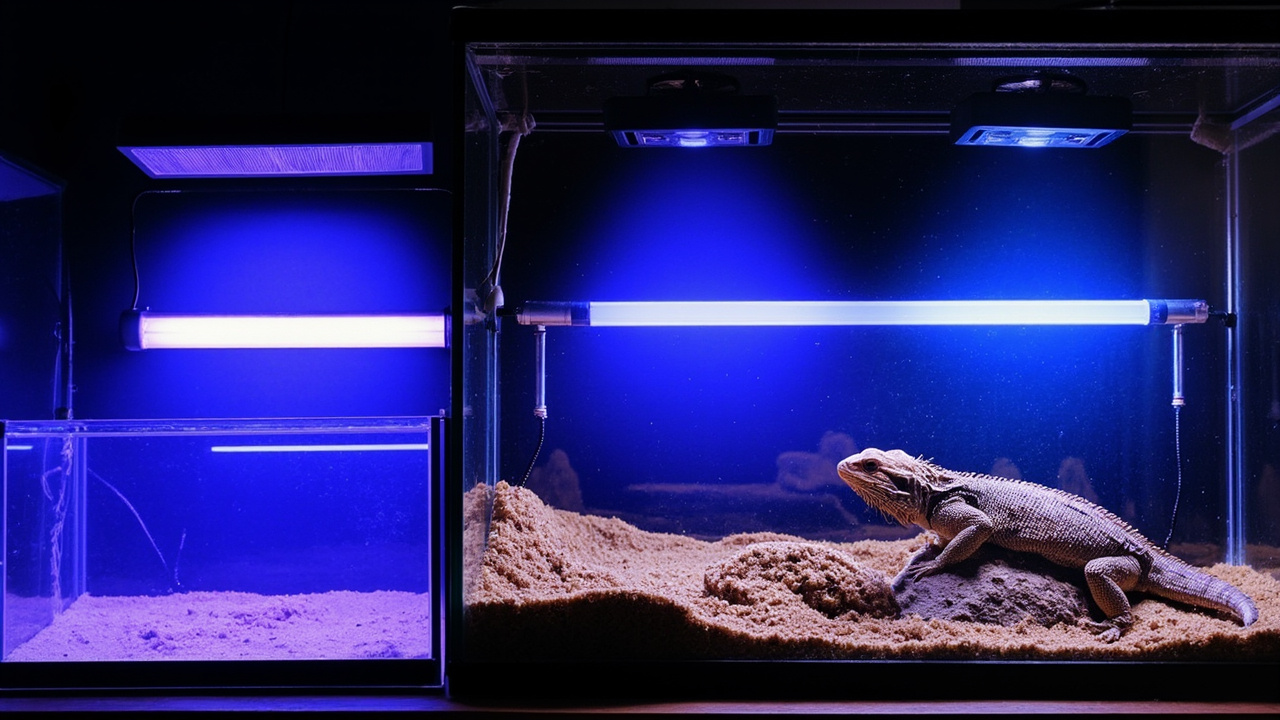
UVB — a Zoo Med Reptisun 10.0 T5 HO ($34.01) fluorescent tube mounted inside the enclosure (not behind glass — glass blocks UVB). Replace the tube every 6-12 months even if it still lights up, because UVB output degrades over time.
| Zone | Temperature | Notes |
|---|---|---|
| Basking surface | 95–105°F | Measure with probe thermometer on the surface |
| Warm side ambient | 85–95°F | |
| Cool side ambient | 75–85°F | |
| Nighttime (all zones) | 65–75°F | All lights off; use ceramic heat emitter if below 65°F |
Use our temperature converter to quickly convert between °F and °C.
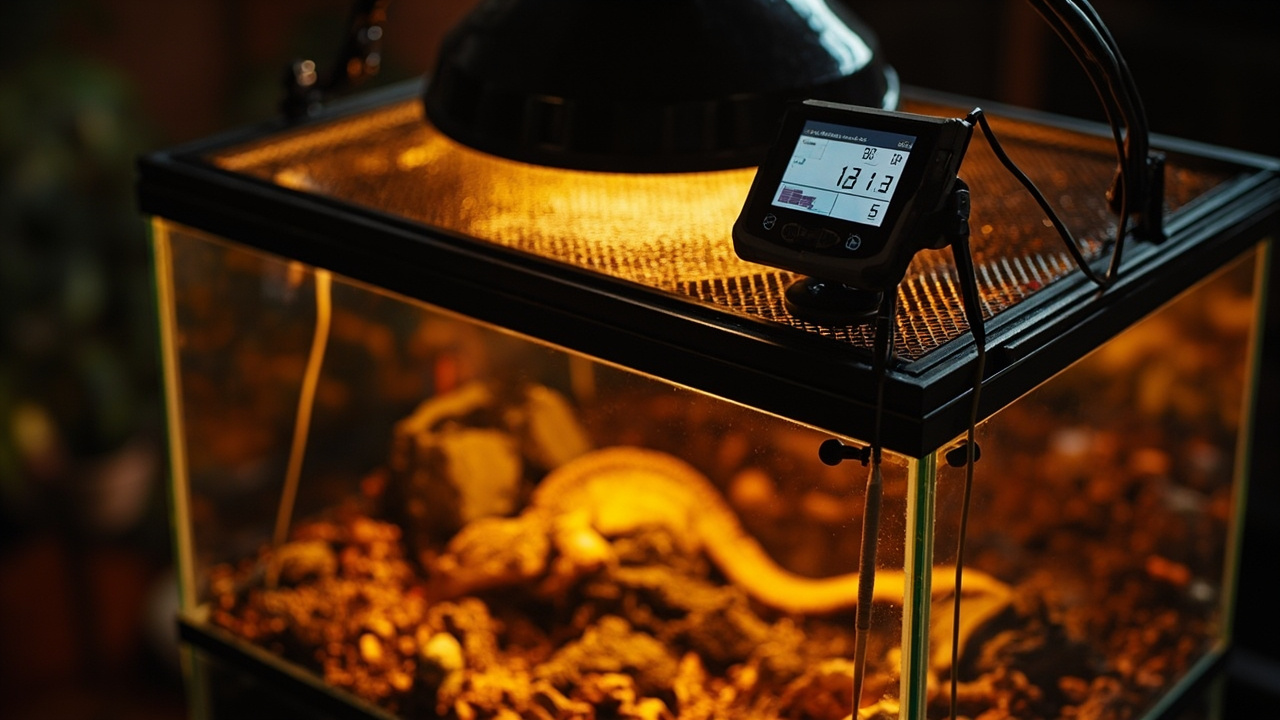
Use a digital probe thermometer placed directly on the basking surface. Gun-style infrared thermometers cost under $15 and give accurate surface readings. Do not rely on stick-on dial thermometers — they measure ambient air, not surface temperature.
Substrate
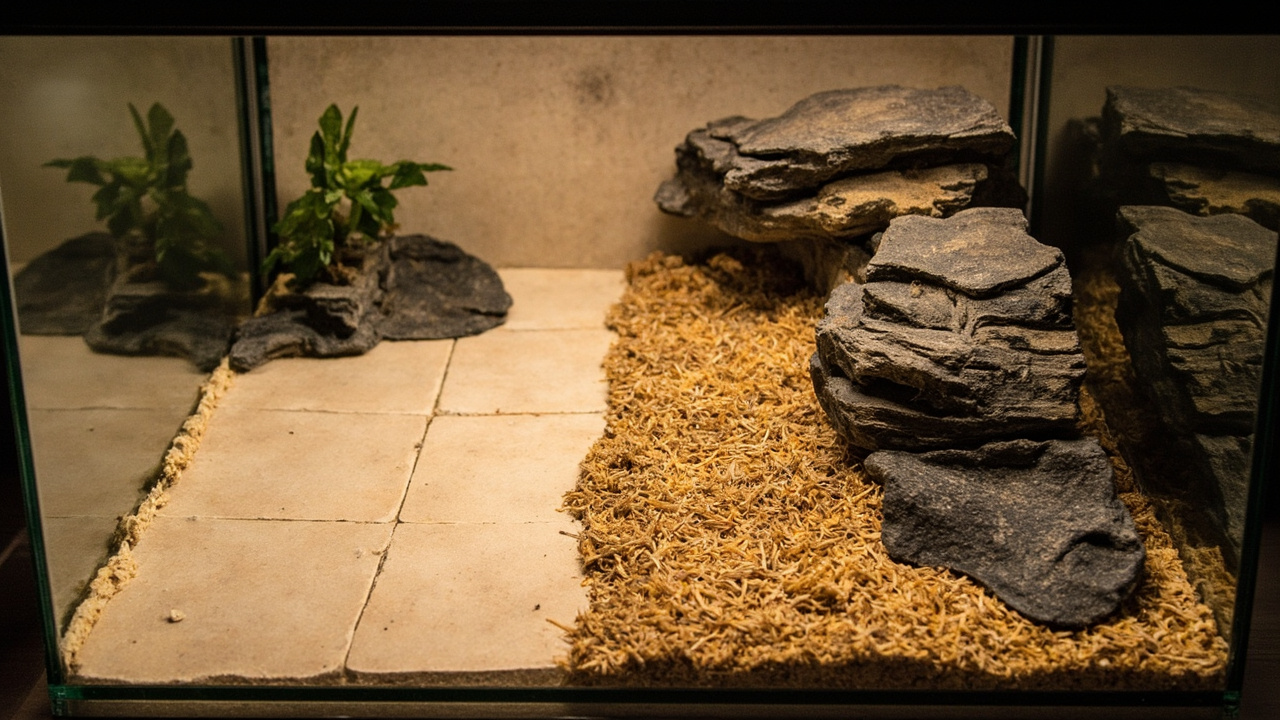
For juveniles, use non-loose substrate only: reptile carpet, ceramic tile, or paper towels. Juveniles are enthusiastic hunters and will accidentally swallow loose particles, causing impaction.
For adults, textured ceramic tile or slate is ideal. Some keepers use fine play sand, but this carries impaction risk even for adults and requires close monitoring.
Never use cedar, pine, or walnut shell bedding. These are toxic to reptiles. Avoid calci-sand — it clumps when wet and causes intestinal blockages. Never feed fireflies — they contain lucibufagins, which are highly toxic and often fatal.
Diet and Feeding
Bearded dragons are omnivores whose diet shifts toward more plant matter as they age, and getting feeding right is the daily heart of bearded dragon care. The key is variety: different insects and different vegetables to ensure balanced nutrition. For feeding guidance for other reptiles, explore our other reptile species guides.
Staple Insects
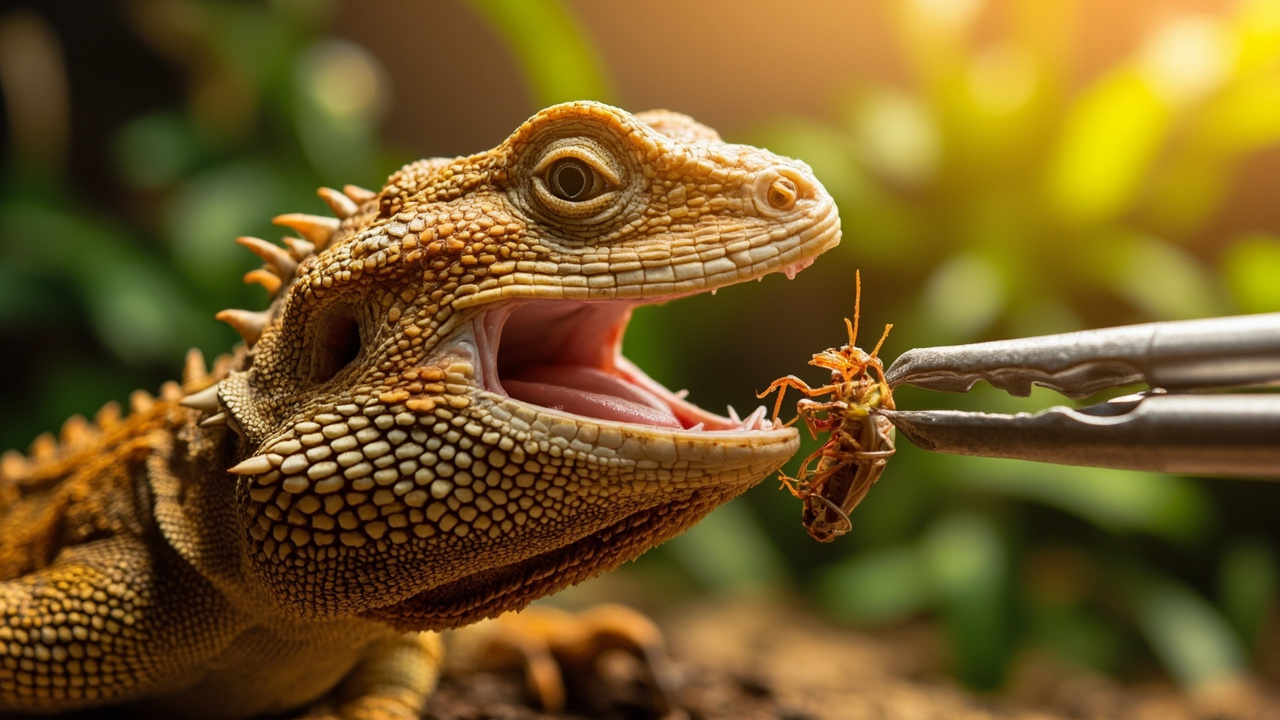
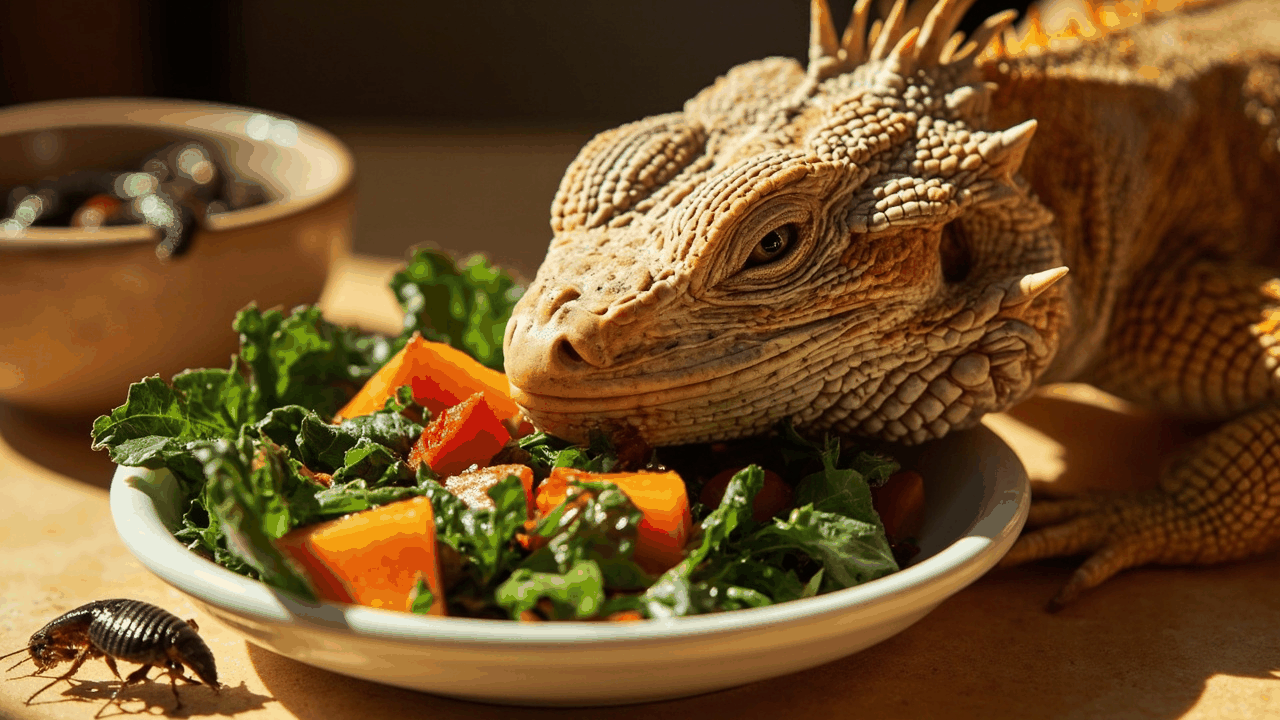
Dubia roaches are the best staple — high protein, low chitin, and they do not smell or chirp like crickets. Midwest 100 Large Dubia Roaches ($28.99) ship live and are easy to keep. Crickets are a good secondary staple. Superworms work for adults but are too hard for juveniles. Hornworms are excellent for hydration but use as treats only.
Staple Vegetables
Collard greens, mustard greens, and turnip greens should form the base of the vegetable portion. Add butternut squash, bell peppers, and snap peas for variety. Avoid spinach and beet greens — their high oxalate content binds calcium and reduces absorption.
Feeding Schedule
| Age | Frequency | Diet Ratio |
|---|---|---|
| Hatchling (0-3 months) | 2-3x daily | 70-80% insects, 20-30% greens |
| Juvenile (3-12 months) | 2x daily | 50-60% insects, 40-50% greens |
| Adult (12+ months) | Once daily | 30-40% insects, 60-70% greens |
Gut-load feeder insects for 24 hours before offering them. Feed the crickets or roaches carrots, sweet potato, or commercial gut-load formula. What goes into the insect goes into your dragon.
Supplementation
Dust feeder insects with Rep-Cal Calcium with D3 ($14.93) at every feeding for juveniles, and 3-4 times per week for adults. Use a multivitamin supplement once per week for all ages. Place insects in a bag with the powder and shake gently.
All-in-One Pellet Diets vs. Fresh Food (and Why UVB Still Matters)
Walk into any pet store and you’ll find “complete” bearded dragon pellets — extruded kibble that promises balanced nutrition from a jar. They aren’t a scam, and they do have a place. That place just isn’t the base of the diet in a well-rounded bearded dragon care plan.
Here’s where pellets fall short of fresh food:
- Hydration — bearded dragons rarely drink from a standing water dish. They get most of their moisture from fresh greens and juicy insects, and dry kibble can’t do that job.
- Enrichment — hunting dubia roaches or chasing crickets is real exercise for a young dragon. A dish of pellets gives them nothing to stalk, chase, or work for.
- Calcium control — when you dust fresh feeders, you decide exactly what gets eaten that day. Pellets come pre-dosed, and you can’t dial calcium up for a fast-growing juvenile or down for a sedentary adult.
Care references like the ReptiFiles bearded dragon guide build the diet around live insects and leafy greens first, with commercial formulas used as a supplement rather than a replacement. If a busy week forces shortcuts, a pellet meal here and there won’t hurt — just don’t let the jar quietly become the whole menu. For the full feeding breakdown by age, see our bearded dragon diet guide.
Why UVB Ties Into Diet
Pellet bags often print “with D3” on the label, which leads keepers to a fair question — if the food already contains vitamin D3, can you skip the UVB bulb? I’d make that trade never. Bearded dragons are open-sun baskers (Ferguson Zone 3-4). In the wild they absorb UVB while basking, and their skin uses that energy to synthesize vitamin D3 on demand. That D3 makes dietary calcium usable, which is what keeps bones solid. Dietary D3 from powder or pellets behaves more like a backup line — it generally can’t carry the whole job in this species, and a dragon eating fortified food under a dead bulb is still a candidate for metabolic bone disease.

The practical pairing is simple: fresh insects and greens as the base, UVB as the D3 engine, and calcium dusting as insurance. Our bearded dragon UVB guide covers bulb strength, mounting distance, and replacement timing so the “D3 engine” never quietly dies of old age. If your dragon refuses everything but pellets, or shows MBD warning signs like swollen limbs or a rubbery jaw, don’t troubleshoot diet alone — get a reptile vet involved early.
Common Health Issues
Health monitoring rounds out bearded dragon care — dragons hide illness well, so learn the early warning signs below.
Metabolic Bone Disease (MBD)
MBD is the most preventable health problem in bearded dragons. It results from inadequate calcium absorption, typically from insufficient UVB exposure or calcium supplementation. Symptoms include swollen limbs, rubbery jaw, tremors, and lethargy. MBD is irreversible once bone deformation occurs — prevention through proper UVB and calcium is the only cure. Learn more about common reptile health issues in our health section.
Impaction
Intestinal blockage from swallowed substrate, large prey, or foreign objects. Symptoms include regurgitation, bloating, constipation, and lethargy. Warm baths (85-90°F, 10-15 minutes) can stimulate bowel movements. If symptoms persist beyond 48 hours, see an exotic vet immediately.
Yellow Fungus Disease
A contagious fungal infection that causes yellow/brown crusty lesions on the skin. It is highly contagious to other reptiles and requires veterinary treatment with antifungal medication. Quarantine any dragon showing symptoms immediately.
When to See a Vet
Seek veterinary care if your dragon shows any of these signs for more than 48 hours: refusal to eat, swelling in limbs or jaw, discharge from eyes or mouth, difficulty shedding, blackening beard that does not resolve after the stressor is removed, or runny/discolored stool. Find a reptile-experienced veterinarian through arav.org. New to reptile care? Start with our beginner’s guide.
Behavior and Handling
Bearded dragons are among the most handleable pet lizards. Understanding their body language is a core bearded dragon care skill and helps you respond appropriately:
- Beard puffing and blackening — display of stress, aggression, or excitement. Common during feeding or when startled.
- Arm waving — a submissive gesture, often seen in juveniles. It signals “I am not a threat.”
- Head bobbing — dominance display, typically in males. Faster bobbing indicates more intense assertion.
- Mouth gaping — normal thermoregulation when basking. The dragon opens its mouth to release excess heat. If accompanied by bubbles from the nose, it is a respiratory infection.
For handling, support the body from underneath with your palm and gently hold the base of the tail with your other hand. Never grab from above. Start with 5-minute sessions and gradually increase to 10-15 minutes daily. For more care tips, browse our care guides.
Popular Morphs
Decades of selective breeding have produced numerous color and pattern variations. Morph does not affect care requirements:
- Normal/Classic — brown/tan with darker patterns
- Leatherback — reduced scale texture, smoother appearance
- Silkback — completely smooth, no spikes. Requires extra humidity care.
- Hypo — reduced pattern and color intensity
- Translucent — semi-transparent scales, often with dark eyes
- German Giant — selectively bred for larger size (up to 28 inches)
Lifespan and Size
Adult bearded dragons reach 16–24 inches in total length and weigh 300-500 grams. Sexual maturity occurs at 8-12 months. With consistent bearded dragon care, they live 10-15 years in captivity. Males tend to be larger than females. Bearded dragons grow rapidly in their first year — from 4 inches at hatch to 16+ inches — and then growth slows significantly. For a step-by-step gear list covering enclosure, lighting, heating, substrate, and thermostat before you bring a dragon home, see our reptile starter supplies checklist. For a side-by-side budget comparison with leopard geckos and other popular beginner species, try our setup cost calculator before you buy. The bearded dragon shedding cycle (every 4-6 weeks for juveniles, every 1-3 months for adults) is covered step-by-step in our shedding guide, including humidity targets and stuck-shed removal. For the enclosure that holds all of this, see our bearded dragon tank size by age chart covering the 40-gallon breeder hatchling setup through the 120-gallon (48x24x24) adult minimum.
Sources
- Merck Veterinary Manual: Overview of Reptiles — type: authority; access-year: 2026
- ReptiFiles Bearded Dragon Care Guide — type: authority; access-year: 2026