For informational purposes only. Not a substitute for veterinary advice. Consult your veterinarian for specific medical decisions.
Follow product labels; observe the animal closely, and seek qualified veterinary help when signs persist or worsen.
Quick Answer
Crested geckos thrive on a powdered commercial diet (Pangea, Repashy) mixed with water — no live prey required. Feed juveniles daily, adults every other day. The diet should be MRP (meal replacement powder) consistency, not too thin. Supplement with calcium + D3 once weekly. Crested geckos also eat small feeder insects (crickets, roaches) 1-2 times per week for variety. This complete feeding guide by age walks through hatchling, juvenile, and adult portions, supplements, and the insects that round out a balanced crested gecko diet.
Reviewed against the sources cited below. Last updated: 2026-08-15.
Why Diet Matters
Feeding your crested gecko doesn’t have to be complicated. Unlike some reptiles that demand live prey at every meal, crested geckos thrive on a powdered commercial diet that you simply mix with water. That said, understanding what goes into their bowl — and what shouldn’t — makes a real difference in their long-term health.
What Do Crested Geckos Eat in the Wild?
In their native New Caledonia, crested geckos are opportunistic omnivores. They forage in the forest canopy at night, lapping up fruit nectar, licking pollen from flowers, and snatching small insects when the opportunity arises. Their wild diet is roughly 70% fruit-based and 30% insect protein.
You don’t need to replicate this exact ratio at home. Commercial gecko diets are specifically formulated to match the nutritional profile they’d get in the wild, including the critical calcium-to-phosphorus balance that wild fruit alone can’t provide.
The Staple: Commercial Gecko Diet (CGD)
Commercial gecko diet (CGD) is the foundation of captive crested gecko nutrition. It’s a powdered formula that you mix with water at a 2:1 ratio (powder to water by volume) and serve in a small dish. Two brands dominate the market: Pangea and Repashy.
Gargeer 2oz Picky Geck Growth Formula
Gargeer 2oz Picky Geck Growth Formula is the go-to choice for most keepers. The 2 oz pouch is a compact starter size for a single gecko, and the growth-focused formula has broad appeal — most geckos eat it enthusiastically from the first serving. It contains vitamins, minerals, and protein in one complete formula.
Repashy Crested Gecko Diet Banana
Repashy Crested Gecko Diet Banana comes in a 6 oz jar and offers a different flavor profile that many geckos find irresistible. Repashy was one of the first companies to develop CGD specifically for Rhacodactylus geckos, and their banana formula remains a reliable staple.
Other Solid Options
For keepers who want to rotate flavors and prevent their gecko from getting bored, Zoo Med Crested Gecko Food (Watermelon) and Repashy Grubs ‘N’ Fruit are both excellent choices. The Repashy Grubs formula has slightly higher protein content, which can benefit growing juveniles and breeding females.
Live Insects as Supplements
While CGD covers all nutritional bases, offering live insects a couple of times per week adds mental stimulation and exercise. Good options include:
- Dubia roaches — high protein, easy to digest
- Crickets — widely available, good activity for hunting instinct
- Black soldier fly larvae (BSFL) — excellent calcium content
Always gut-load insects for 24 hours before feeding with nutritious foods like carrots, sweet potato, and leafy greens. This transfers nutrients directly to your gecko when they eat the insect. Dust each insect with a calcium + D3 supplement before offering it.
Insects should be sized no wider than the space between your gecko’s eyes to prevent choking. A good rule: if it looks too big, it probably is. Start with 3–5 appropriately sized insects per feeding session and adjust based on your gecko’s appetite. See our bearded dragon diet guide for more on gut-loading techniques.
Safe and Unsafe Fruits
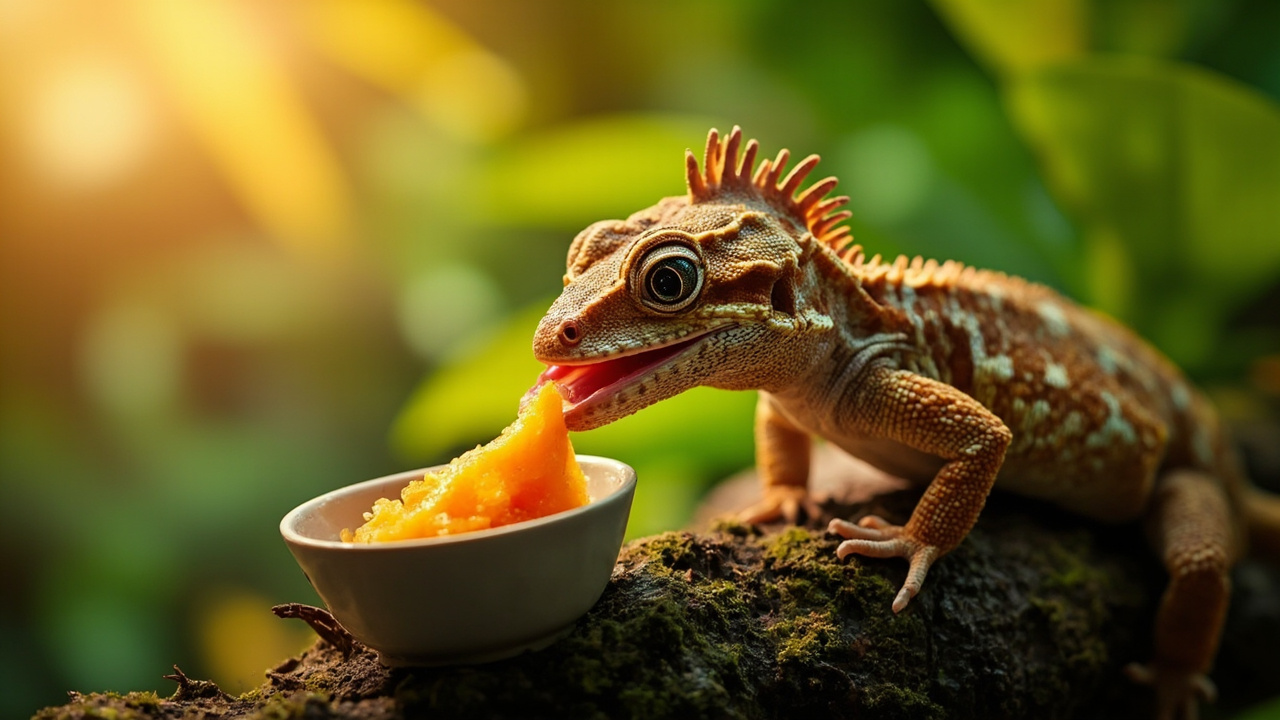
Crested geckos enjoy fresh fruit as an occasional treat, but it shouldn’t replace CGD. Safe fruits include mango, papaya, banana, peach, apricot, and fig — you’ll notice these match the flavors in commercial diets for good reason.
Avoid citrus fruits (oranges, lemons, grapefruit) — the citric acid can cause digestive upset. Avocado contains persin, a compound toxic to many reptiles and potentially fatal. Rhubarb and tomato leaves are also unsafe due to oxalate content.
Stick to a small bite-sized piece once a week at most. Fruit is a treat, not a meal replacement. Remove any uneaten fruit after a few hours to prevent bacterial growth in the warm enclosure environment.
Toxic Plants to Avoid in the Enclosure
Beyond food, crested geckos sometimes lick or nibble leaves while exploring the enclosure. Avoid these toxic plants in any crested gecko enclosure: philodendron, pothos, dieffenbachia (dumb cane), peace lily, caladium, oleander, and azalea. Safe plant options include pothos-free alternatives like hibiscus, bromeliads, and certain dracaena species. For a deeper dive into safe enclosure plants, see our crested gecko species hub.
Feeding Schedule by Age
Feeding frequency depends on your gecko’s age:
- Hatchlings (0–6 months): Offer fresh CGD daily. Young geckos are growing rapidly and need consistent nutrition. Remove and replace food every 24 hours.
- Juveniles (6–12 months): Feed 4–5 times per week. You can start leaving uneaten food for up to 36 hours at this stage.
- Adults (12+ months): Feed 3 times per week. Adults maintain weight easily and don’t need daily feeding.
Since crested geckos are nocturnal, place fresh food in the enclosure in the early evening and remove it the following morning. This timing aligns with their natural activity cycle — you’ll notice your gecko becoming more active and exploring the enclosure as the lights dim. A food dish positioned mid-height on a branch or wall is ideal, since crested geckos prefer to eat off elevated surfaces rather than the ground.
Using a shallow dish (like a bottle cap or small plastic condiment cup) works well. Deep bowls can make it difficult for geckos to access the food, especially juveniles. Clean the dish thoroughly between each feeding to prevent bacterial buildup. For general enclosure setup, including thermostat placement, check out our reptile thermostat guide.
For comparison with other popular reptile diets, our leopard gecko diet guide covers a very different feeding approach — leopard geckos are primarily insectivores and don’t use CGD at all. Similarly, ball python feeding follows a completely different schedule based on frozen-thawed rodents. And if you’re interested in UVB requirements that complement proper nutrition, our bearded dragon UVB guide covers the lighting side of reptile health, while our bearded dragon tank size guide covers enclosure requirements.
Feeding Schedule Summary (Quick Reference Table)
The right feeding schedule depends on age, body condition, and breeding status. Below is a quick reference chart — read the Feeding Schedule by Age section above for full context. Use this table to set alarms or reminders when you’re still dialing in the routine.
Hatchlings (0–6 Months)
Feed fresh CGD daily, in a small bottle-cap-sized portion. Remove and discard uneaten food after 24 hours. Offer 1–2 appropriately sized insects twice weekly (dusted with calcium + D3).
Juveniles (6–12 Months)
Feed CGD 4–5 times per week. Insects can increase to 2–3 times weekly, gut-loaded and dusted. Monitor weight weekly — juveniles should gain steadily until they hit adult size around 12 months.
Adults (12+ Months)
Feed CGD 3 times per week on a consistent schedule (e.g., Monday, Wednesday, Friday). Offer insects 1–2 times per week as enrichment, not as the main protein source. Reduce portions slightly if the gecko develops fat pads at the base of the tail.
Breeding Females
Breeding females need extra calcium and protein during the laying season. Increase feeding to 5–6 times per week and offer calcium-dusted insects daily. Separate males after breeding to prevent over-breeding stress. For more on breeding season diet adjustments, see the Breeding Season Diet Adjustments section below.
Calcium & Vitamin D3 Supplementation
Supplementation is what separates a “feeding” crested gecko from a “thriving” one. Commercial CGD already includes calcium and vitamin D3, but the formulation matters when insects enter the picture. The Merck Veterinary Manual and ReptiFiles both emphasize maintaining a 2:1 calcium-to-phosphorus ratio in the total diet.
Why Calcium-to-Phosphorus Ratio Matters
Calcium and phosphorus work as a pair — too much of either blocks absorption of the other. Wild crested geckos eat a 2:1 calcium-to-phosphorus diet from fruit and insects. CGD formulas like Gargeer Picky Geck Growth Formula and Repashy Grubs ‘N’ Fruit are engineered to hit this ratio. When you feed insects separately, dust them with a calcium supplement that includes D3 to keep the ratio balanced.
Dusting Schedule (CGD Already Has Ca — Insects Need Dusting)
CGD alone provides enough calcium and D3 for adults fed 3x per week. But any time you offer insects — crickets, roaches, black soldier fly larvae — dust them with a calcium + D3 powder like Repashy Calcium Plus HyD ($14.99). Dust once per insect feeding for juveniles, 2–3 times per week for adults that eat insects daily.
UVB’s Role in D3 Synthesis
CGD includes synthetic vitamin D3 because wild crested geckos are crepuscular and don’t synthesize large amounts of D3 from sunlight. However, modern husbandry increasingly recommends low-level UVB (Arcadia Shade Dweller 7% or Zoo Med Reptisun 5.0) for natural D3 synthesis. UVB does not replace dietary D3, but it complements it and supports natural calcium metabolism. For full UVB setup guidance, see our UVB bulb selection guide.
Hydration & Misting Diet
Crested geckos get most of their water from misting, fruit content in CGD, and dew on enclosure surfaces. The way humidity cycles interact with feeding has a direct impact on hydration status and shedding.
Water Sources (Shallow Dish vs Misting vs Drippers)
Three water delivery methods are common in crested gecko husbandry:
- Misting — the primary hydration source. Mist the enclosure once or twice daily to bring humidity to 70–80%, then let it drop to 50–60% by evening. Geckos lap water droplets off leaves and walls.
- Shallow water dish — a secondary backup. Place a small, shallow dish with fresh water in the enclosure at all times. The dish should be no deeper than the gecko’s snout-to-shoulder height to prevent drowning.
- Dripper — useful in dry climates or for finicky drinkers. A slow dripper over foliage simulates rain and encourages drinking behavior.
How Humidity Affects Diet (60–80% for Crested Geckos)
Humidity cycles influence appetite and digestion. A gecko that is too dry often refuses food and has trouble shedding. Aim for a humidity cycle of 60–80% — peaks after misting, drops to 50% between cycles. The REPTIZOO magnetic gecko feeding ledge ($14.99) keeps CGD elevated at mid-height, which prevents the food from drying out too quickly and matches the gecko’s natural canopy eating behavior.
Dehydration Signs (Stuck Shed, Sunken Eyes, Lethargy)
Watch for early dehydration signs: stuck shed on toes or tail tip, sunken eyes, wrinkly skin, and lethargy. If these appear, mist more frequently, offer a temporary humid hide, and check the enclosure humidity with a digital hygrometer. Persistent dehydration requires a reptile veterinarian visit — it can progress to kidney issues if left untreated.
Insects vs Fruit Mix: Do Crested Geckos Even Need Live Food?
One of the most debated topics in crested gecko care is whether live insects are necessary at all. The CGD revolution of the 1990s changed the consensus from “yes, absolutely” to “technically optional, but beneficial.”
The MRP Revolution (1990s Pangea/Repashy Origin)
Before commercial meal replacement powders (MRP) became widely available in the late 1990s and early 2000s, crested geckos were considered difficult to keep because keepers had to replicate the wild fruit-and-insect diet at home. Allen Repashy’s work and Bill Strand’s Pangea development changed the entire hobby by producing a powdered formula that mixed with water and provided complete nutrition. The crested gecko went from “fragile pet” to “beginner-friendly” almost overnight.
Why Some Keepers Still Feed Insects
Even with complete CGD formulas, experienced keepers still offer insects for several reasons:
- Mental enrichment — hunting triggers natural predatory behavior and exercise
- Higher protein demand — growing juveniles, breeding females, and recovering females benefit from extra protein
- Variable appetite — some geckos get bored with CGD and insects keep them interested
- Hydration supplement — insects have moisture content that complements CGD
Recommended Weekly Insect Ratio
For an adult crested gecko, 1–2 insect feedings per week is the typical recommendation. Each insect feeding should be 3–5 appropriately sized prey items (no wider than the space between the gecko’s eyes). Best insect choices: dubia roaches, crickets, and black soldier fly larvae. Worst choice: mealworms as a staple (tough chitin, poor Ca:P ratio).
Crested Gecko Diet Problems
Even with a perfect CGD routine, dietary issues can appear. Recognizing the warning signs early gives you the best chance of correcting course before the problem becomes chronic.
Refusal to Eat
Adult crested geckos occasionally skip meals, especially during seasonal cooling or stress from a new enclosure. Refusal becomes concerning when it lasts more than 2–3 weeks or accompanies weight loss. Common causes: low enclosure temperature (below 65°F at night), stress from recent handling, illness, or stale food. Try offering a different flavor (Pangea Watermelon is a fallback favorite) and verify that the CGD was mixed fresh.
Metabolic Bone Disease (MBD) Signs
MBD is the most common serious dietary disease in captive crested geckos. It develops when dietary calcium is insufficient or the calcium-to-phosphorus ratio is wrong over months or years. Early signs include a soft or rubbery jaw, tremors in the limbs, kinked tail, and lethargy. Late-stage MBD causes bone deformities and seizures. Treatment requires a reptile veterinarian — injectable calcium, dietary correction, and sometimes UVB therapy. For more on MBD in reptiles generally, see our metabolic bone disease guide.
Obesity (Overfeeding CGD)
Crested geckos store fat in their tails and at the base of their limbs. Heavy fat deposits indicate overfeeding. Adult crested geckos only need CGD 3 times per week — feeding daily causes obesity, which shortens lifespan and predisposes the gecko to fatty liver disease. Reduce portion size or feeding frequency if the gecko’s tail is wider than its body.
FTS (Floppy Tail Syndrome) from Poor Diet
Floppy Tail Syndrome (FTS) is when the crested gecko’s tail hangs limply to one side rather than curling naturally. It is caused by a combination of weak muscles (often from dietary calcium deficiency) and insufficient climbing surfaces. FTS is not reversible, but progression can be halted by correcting the diet, adding more climbing branches and vines, and reducing reliance on glass walls.
Breeding Season Diet Adjustments
Breeding crested geckos have different nutritional needs than pets. Females especially need extra calcium and protein to produce healthy eggs.
Female Conditioning (Higher Protein + Calcium)
In the 4–6 weeks before breeding, increase the female’s protein and calcium intake. Switch from a fruit-only CGD to a higher-protein formula like Gargeer Picky Geck Growth Formula or Repashy Grubs ‘N’ Fruit. Offer calcium-dusted insects every other day. Continue this elevated feeding through egg-laying and into the recovery period.
Hatchling First Meals
Newly hatched crested geckos absorb the remaining yolk sac for the first 24–48 hours. After that, they will start licking CGD from small dishes. Offer a tiny amount of CGD (pea-sized portion) every day. Hatchlings need daily feeding and consistent humidity to thrive. Do not offer insects until the hatchling is at least 10 grams and consistently eating CGD — usually around 4–6 weeks of age. The crested gecko diet chart later in this guide summarizes portions, frequency, and supplements for every age group so you can reference it at feeding time.
Sources
- Merck Veterinary Manual: Overview of Reptiles — type: authority; access-year: 2026
- ReptiFiles Crested Gecko Care Guide — type: authority; access-year: 2026
- Pangea Reptile — Feeding Schedules by Age — type: authority; access-year: 2026